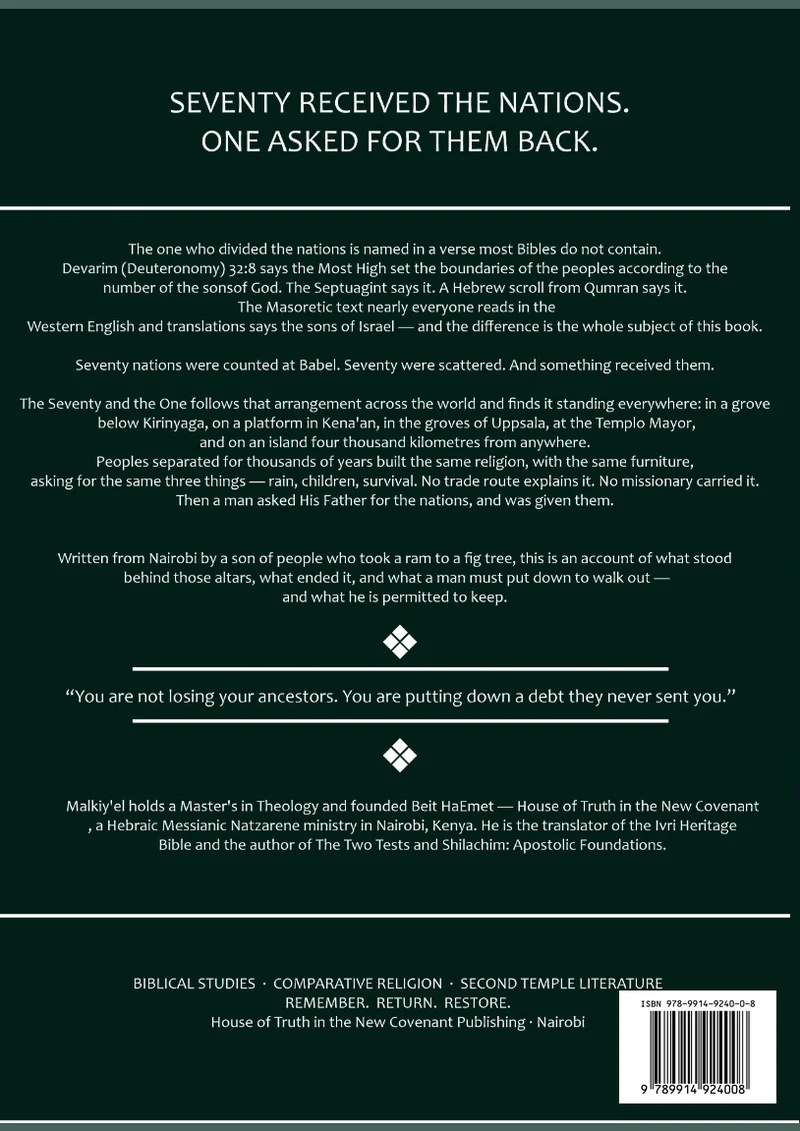
The one who divided the nations is named in a verse most Bibles do not contain. Devarim 32:8 says the Most High set the boundaries of the peoples according to the number of the sons of God. The Septuagint says it. A Hebrew scroll from Qumran says it. The Masoretic text that nearly everyone reads in Western English says the sons of Israel, and the difference is the whole subject of this book.
Seventy nations were counted at Babel. Seventy were scattered. And something received them. The Seventy and the One follows that arrangement across the world and finds it standing everywhere: in a grove below Kirinyaga, on a platform in Kena'an, in the groves of Uppsala, at the Templo Mayor, and on an island four thousand kilometres from anywhere. Peoples separated for thousands of years built the same religion, with the same furniture, asking for the same three things: rain, children, survival. No trade route explains it. No missionary carried it.
Then a man asked His Father for the nations, and was given them.
Written from Nairobi by a son of people who took a ram to a fig tree, this is an account of what stood behind those altars, what ended it, and what a man must put down to walk out, and what he is permitted to keep.